The Complete Guide to Greenhouse Foundations & Base Preparation
What Is the Best Foundation for a Greenhouse?
This is one of the most common questions we receive.
"What is the best foundation for my greenhouse?"
The Answer...
There isn't a single "best" foundation for every greenhouse. The right choice depends on your garden, the ground conditions and how you plan to use your greenhouse.
Many gardeners ask whether they should choose a concrete slab, brick perimeter, paving, timber base or simply install the greenhouse directly into the soil.
The good news is that Easy Greenhouses are designed to be flexible. Every greenhouse includes a durable galvanised steel base frame that can either be secured to a built foundation or buried directly into the ground, allowing you to choose the option that best suits your property and growing needs
In this guide, we'll explain the different foundation options and help you decide which is best for your garden.
Choosing the Right Foundation Starts with Choosing the Right Location
Before deciding on a foundation, it's important to choose the right location for your greenhouse.
The location of your greenhouse can influence which type of base is most suitable. For example:
- A flat, well-drained area may only require the greenhouse base to be buried into the soil.
- Sloping or uneven ground may require a raised concrete or paving foundation.
- Areas with poor drainage may benefit from a raised perimeter foundation.
- Windy locations should have the greenhouse securely anchored to a solid foundation.
It's much easier and often more cost-effective to choose the right location before building your foundation than to correct drainage or levelling issues afterwards.
We cover everything you need to know about greenhouse placement, including sunlight, prevailing winds, drainage and accessibility, in our guide:
👉 Choosing the Best Location for Your Greenhouse
Why Is a Greenhouse Foundation So Important?
A foundation does much more than simply support your greenhouse.
A properly prepared foundation helps to:
- Keep the greenhouse level and square
- Improve the strength and stability of the structure
- Prevent movement over time
- Ensure doors and roof vents operate correctly
- Improve drainage where necessary
- Increase the lifespan of your greenhouse
Before assembling your greenhouse, it is essential that the ground and base frame are completely level and square. We also recommend assembling the greenhouse on level ground before securing it to the foundation or into the soil.
Option 1: Build a Raised Foundation
A built foundation is an excellent option for homeowners looking for a permanent greenhouse installation.
Building your own foundation is particularly useful if you:
- Want more internal growing depth
- Need to build up uneven or sloping ground
- Have drainage concerns
- Want a permanent, landscaped finish around your greenhouse
There are several materials commonly used for greenhouse foundations.
Concrete Foundations
Concrete is one of the strongest and most durable foundation materials available.
Benefits
✔ Extremely stable
✔ Long-lasting
✔ Moisture resistant
✔ Ideal for permanent installations
Concrete provides excellent support for your greenhouse. However, because concrete can retain heat and cold, it's important to manage the greenhouse climate with good ventilation during warmer months.

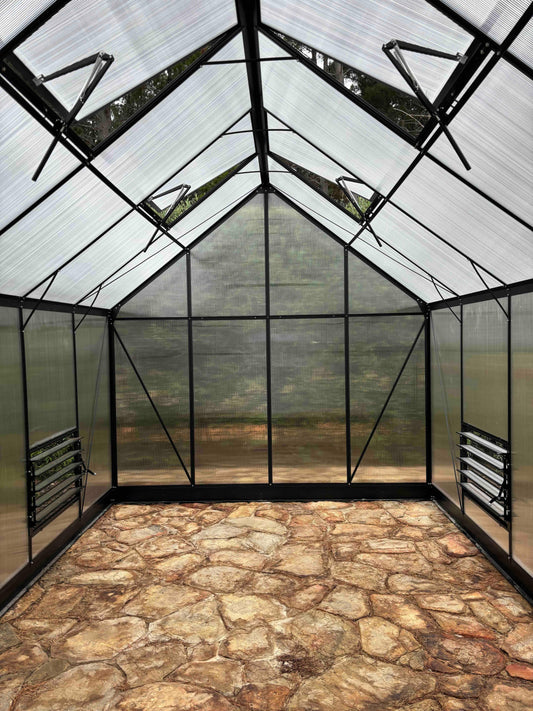
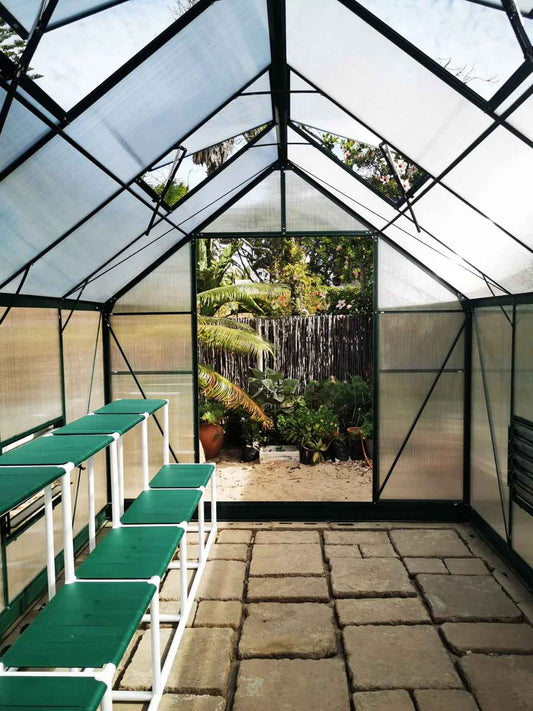
Brick or Paver Foundations
Brick and paving foundations are one of the most popular choices for home gardeners.
Benefits
✔ Attractive appearance
✔ Flat, stable surface
✔ Good drainage
✔ Easy to install
Pavers also create attractive walkways inside and around the greenhouse while providing a stable base for everyday use.

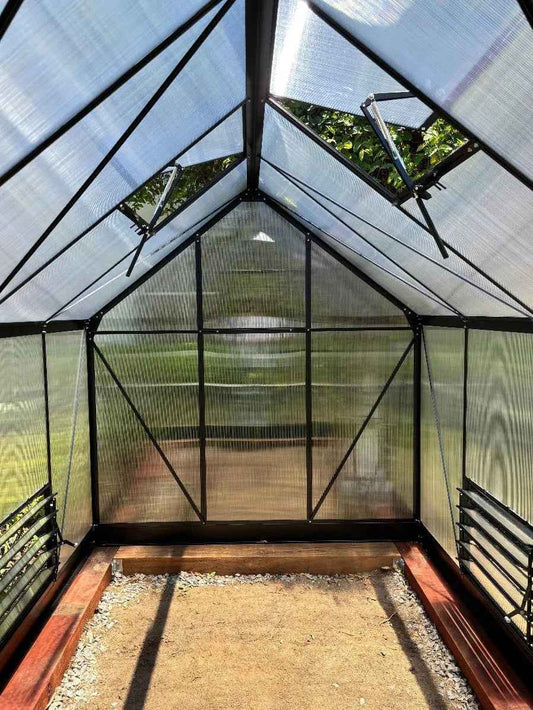
Treated Timber Foundations
Treated timber is another practical option, particularly for smaller greenhouses.
Benefits
✔ Cost-effective
✔ Easy to work with
✔ Resistant to decay
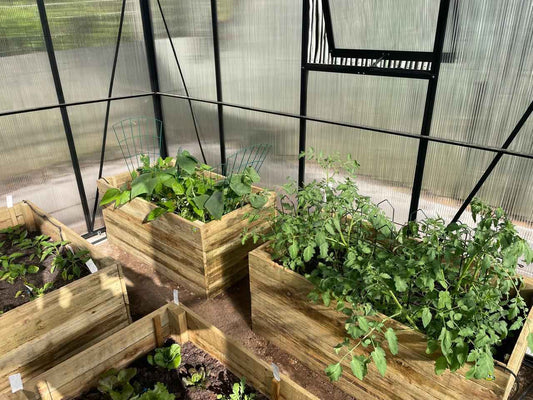
✔ Suitable for raised beds or perimeter walls
Timber foundations are often chosen where homeowners prefer a more natural garden aesthetic.

Brick/Concrete Perimeter Foundations
Ideal when creating a raised greenhouse and allows you to create more height while still being able to plant directly into the soil inside the greenhouse.
Benefits
✔ Creates additional growing height
✔ Excellent stability
✔ Suitable for uneven ground
✔ Durable and long lasting

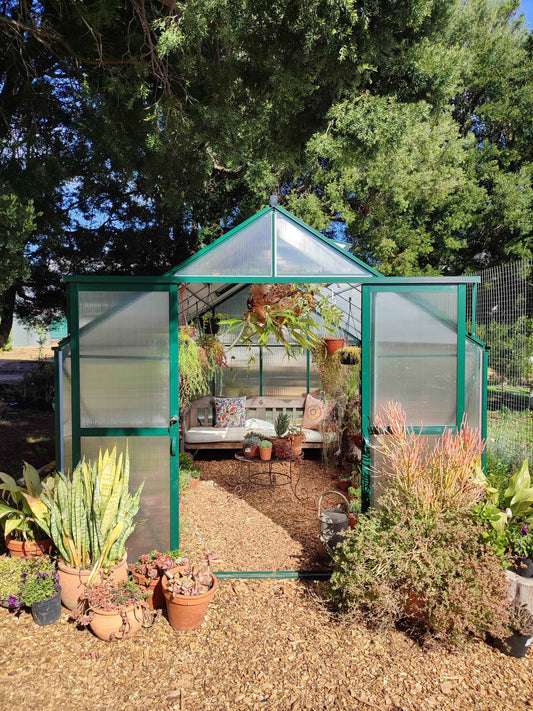
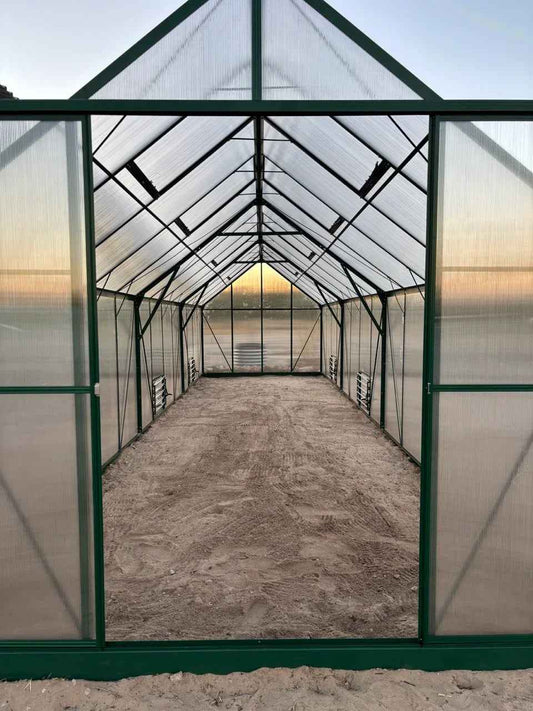
Option 2: Burying the Greenhouse Base
Many of our customers choose to bury the greenhouse base directly into the soil.
This is the simplest and most cost-effective installation option, especially if you already have level ground available.
The hollow base frame can be buried and filled with:
- Soil
- Gravel
- Bricks
- Pavers
Once compacted, the base becomes securely anchored while allowing you to plant directly into the ground inside your greenhouse.
This option is ideal if you want a natural growing environment for vegetables and larger crops.
Installing a Buried Base
If you're burying your greenhouse base, we recommend:
- Digging a trench approximately 80-100mm deep
- Positioning the base frame so it remains completely level
- Building the greenhouse before backfilling
Once the greenhouse has been assembled in its entirety you can then fill the base with soil, stones, pavers etc.
Taking the time to prepare the site correctly will ensure your greenhouse remains secure for years to come.


Securing Your Greenhouse
Regardless of which foundation option you choose, the greenhouse must be securely fixed to the foundation or ground once assembled.
For built foundations, we recommend securing the base using:
- Rawl bolts through the base frame's C-channel, or
- External L-brackets fixed to the foundation.
If you're installing a greenhouse with extension sections, reinforcing the base at the join provides additional strength and stability.
Shop our Anchor Kits for securing onto a built foundation.
If you are securing the base directly into the soil you can fill the base with soil, stones, pavers etc or utilize our Anchor Legs to secure the base directly into the ground.
Shop our Anchor Legs for securing directly into the soil
Pro Tips Before You Build
To achieve the best possible installation, we recommend:
✅ Make sure the ground is completely level before assembling your greenhouse.
✅ Build your greenhouse on level ground before securing it permanently.
✅ Consider making your foundation slightly larger than the greenhouse to create space for securing the structure or walking around it.
✅ If your garden is prone to strong winds, ensure the greenhouse is securely anchored to the ground or foundation.
Frequently Asked Questions
Does my greenhouse need a foundation?
Yes. Every greenhouse should be installed on a level, stable surface. Whether you choose a built foundation or bury the base frame, proper preparation is essential for the greenhouse's performance and longevity.
Can I put my greenhouse directly on soil?
Yes. Easy Greenhouses are designed so the base frame can be buried directly into the soil, provided the ground is level and the base is compacted correctly after installation.
What is the best foundation for a greenhouse?
The best foundation depends on your garden and growing goals. Concrete offers maximum stability, brick and pavers provide an attractive finish, while a buried base is an affordable option that allows for direct planting into the soil.
Should I anchor my greenhouse?
Absolutely. Every greenhouse should be securely fixed to the foundation or anchored into the ground to improve stability, especially in windy conditions.
Final Thoughts
Choosing the right foundation is one of the most important steps when installing your greenhouse. A level, well-prepared base provides the stability your greenhouse needs, helps ensure smooth operation of doors and vents, and creates the ideal environment for successful gardening.
Whether you choose a concrete perimeter, brick paving, timber foundation or simply bury the base frame into the soil, taking the time to prepare your site correctly will help you enjoy a strong, secure greenhouse for many years to come.
If you're unsure which foundation is best for your garden, our team is always happy to help you choose the option that best suits your location, budget and growing goals.